

June 23, 2026
Trade Dress in Brazil: When a Company's Visual Identity Becomes a Legal Asset and a Competitive Risk
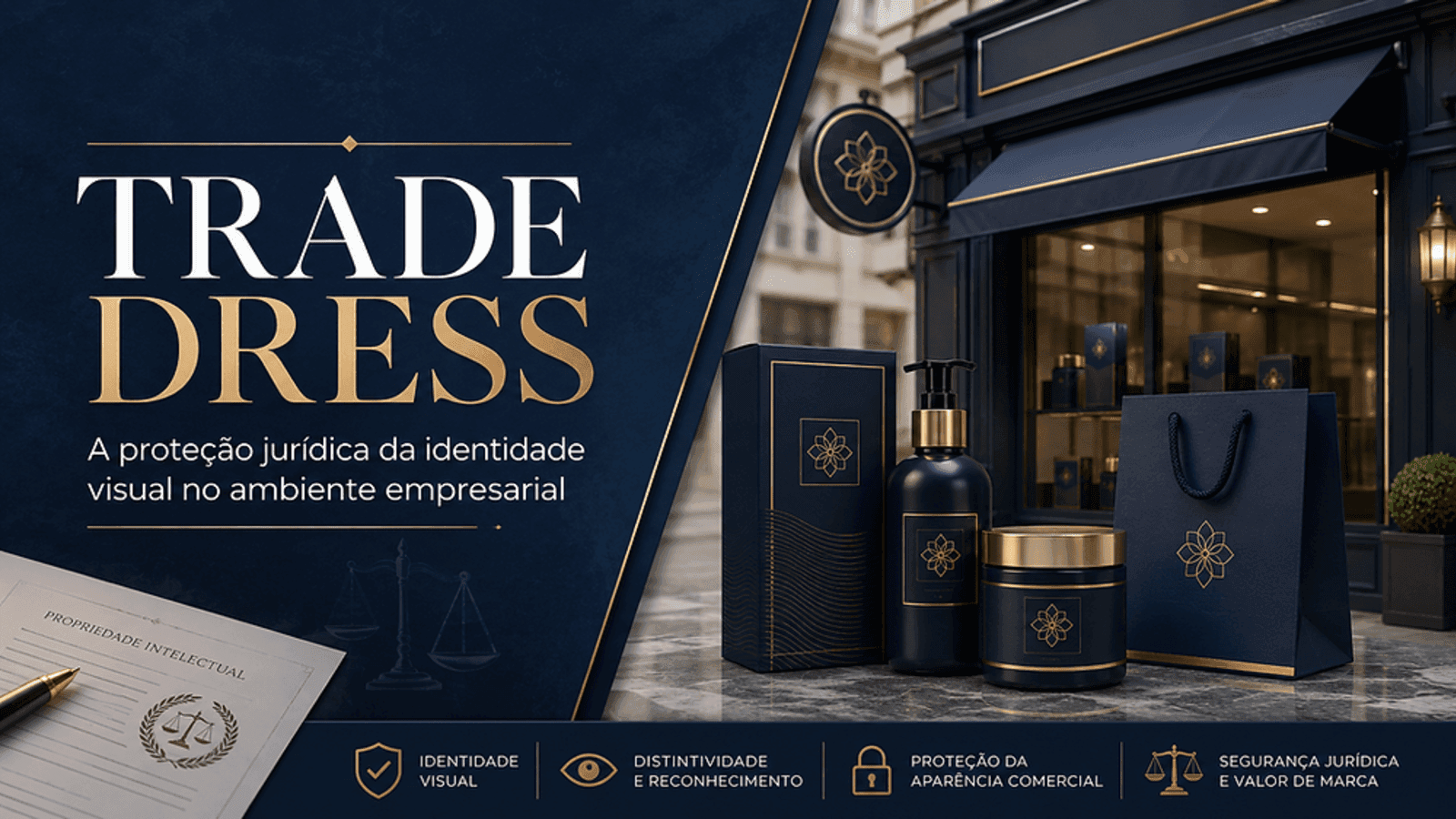
In increasingly competitive markets, visual identity has ceased to be merely a marketing tool and has become a relevant part of a company's intangible assets. Colors, packaging, the arrangement of graphic elements, store layout, product presentation, digital environment, and the consumer's visual experience can create an immediate association between a particular aesthetic pattern and a specific business origin. This set of signs, known as trade dress or "conjunto imagem" (image set/overall visual presentation), influences purchasing decisions, differentiates brands, and strengthens corporate reputation.
The legal problem arises when competitors begin adopting a similar appearance without necessarily copying a registered trademark. The affected company perceives a loss of distinctiveness, a risk of consumer confusion, and possible diversion of customers, but does not always find a straightforward answer within the registration system of the Brazilian Patent and Trademark Office (INPI - Instituto Nacional da Propriedade Industrial). In Brazil, trade dress has no autonomous, express legal framework, which requires an integrated reading of industrial property legislation, the rules against unfair competition, consumer protection law, and the case law of the Superior Court of Justice (STJ - Superior Tribunal de Justiça).
Trade dress represents the overall visual impression of a product, service, or establishment. It is not limited to the logo, trade name, or word mark. It may involve the combination of colors, shapes, typography, layout, packaging, decor, visual communication, product arrangement, storefront, signage, and even sensory elements associated with the consumption experience. For business owners and managers, the practical relevance lies in understanding that this identity is not born solely from a single registration, but from the consistent building of recognition in the market.
Legal protection of the overall visual presentation requires caution, because not every similarity constitutes wrongdoing. Economic sectors have common visual standards, market trends, and functional choices that may be freely used. Transparent packaging to display a product, the use of a certain color associated with a segment, or a technical solution necessary for packaging should not automatically be appropriated by a single company. Protection tends to be more consistent when the overall presentation is distinctive, predates the competitor's use, is not merely functional, and is capable of generating undue association or confusion among consumers.
Law No. 9,279/1996, the Industrial Property Law, is the main starting point. Article 2 includes the repression of unfair competition among the mechanisms for protecting industrial property rights. Article 195, particularly item III, addresses the use of fraudulent means to divert another party's customers. Article 209, in turn, guarantees the right to damages for acts of unfair competition that harm the reputation or business of others, or create confusion between establishments or between products and services placed on the market. The Paris Convention, incorporated into Brazilian law, also reinforces protection against acts contrary to honest practices in industrial or commercial matters.
This regulatory basis reveals that trade dress does not necessarily depend on a specific registration to be litigated in court. Even so, business strategy should not disregard available registrations. Word marks, figurative marks, composite marks, three-dimensional marks, or position marks, industrial designs, copyright over original creations, and confidentiality agreements can together form a more robust protection system. The key point is to map which elements are registrable, which depend on proof of use and distinctiveness, and which should be protected through internal governance practices.
STJ case law has consolidated important criteria. In Special Appeal (REsp) 1,353,451/MG and REsp 1,778,910/SP, the Court emphasized that the analysis of trade dress imitation should not be limited to a superficial visual comparison, and that technical evidence is relevant to assess the market, consumer habits, the consumer's degree of attention, marketing techniques, and the context in which the products were launched. This guidance is particularly important for companies, as it indicates that photographs, screenshots, and internal perceptions are rarely enough to demonstrate the complexity of the disputed overall visual presentation.
In REsp 1,943,690/SP, involving intimate apparel products, the STJ highlighted that trade dress protection requires certain prerequisites, such as distinctiveness, priority in time, absence of a merely functional character, and a risk of confusion or undue association. The Court denied protection where the elements at issue were close to trends common to the segment and there was insufficient evidence of consumer confusion. The message for businesses is clear: investing in visual identity is essential, but legal exclusivity does not extend to everything that is aesthetically similar.
The practical implications are significant. Companies seeking to protect their trade dress should document the creation and evolution of their visual identity, and preserve design studies, market research, campaigns, launch dates, advertising materials, sales reports, consumer reviews, and evidence of public recognition. Proof of priority and distinctiveness should not be organized only after a conflict arises. The more structured the asset's history, the greater the ability to demonstrate its value and its association with the company.
It is also advisable to conduct preventive audits before launching products, packaging, stores, or digital interfaces. The legal risk lies not only in copying registered trademarks, but in coming too close to the overall appearance of relevant competitors. A preventive analysis can identify elements common to the industry, elements protected by third parties, and creative choices capable of reducing the risk of conflict. In expansion operations, franchising, mergers, acquisitions, and licensing, trade dress should be treated as a relevant asset in the due diligence process.
Regulatory and economic trends reinforce the importance of this topic. The digital economy has increased brand exposure, accelerated the reproduction of packaging and interfaces, and made consumer confusion happen more quickly. Marketplaces, social media, apps, and image-based sales increase the relevance of a product's appearance. At the same time, INPI has been updating its trademark examination guidelines, including with respect to non-traditional forms of presentation, which requires constant technical monitoring. Even though trade dress remains without a specific law, the combination of registrations, market evidence, and unfair competition enforcement tends to gain increasing importance.
From a governance standpoint, this topic should be handled in an integrated manner across legal, marketing, product, innovation, and sales departments. Visual creation cannot be seen merely as an aesthetic decision. Each choice can generate value, risk, or vulnerability. Companies that build their own identity, register strategic signs, monitor competitors, and maintain organized documentation reduce uncertainty and increase predictability in negotiations and litigation.
Trade dress is a sophisticated business asset because it combines consumer perception, reputation, design, business strategy, and legal protection. Its protection in Brazil depends on a concrete case-by-case analysis, consistent evidence, and an integrated interpretation of the Industrial Property Law, the Paris Convention, and STJ case law. For companies, the main lesson is that visual identity should not be improvised, nor protected only after a conflict has already arisen.
Preventive action makes it possible to turn the overall visual presentation into a legally defensible competitive advantage. This involves planning registrations, documenting creation and use, monitoring the market, evaluating campaigns in advance, and obtaining specialized legal guidance for strategic decisions. Without promising any particular outcome, preventive legal counsel helps managers understand risks, preserve intangible assets, and make safer decisions in highly competitive environments.
Written by Guilherme Henrique Soares