

July 10, 2026
World Cup Advertising and Ambush Marketing: Legal Boundaries for Companies
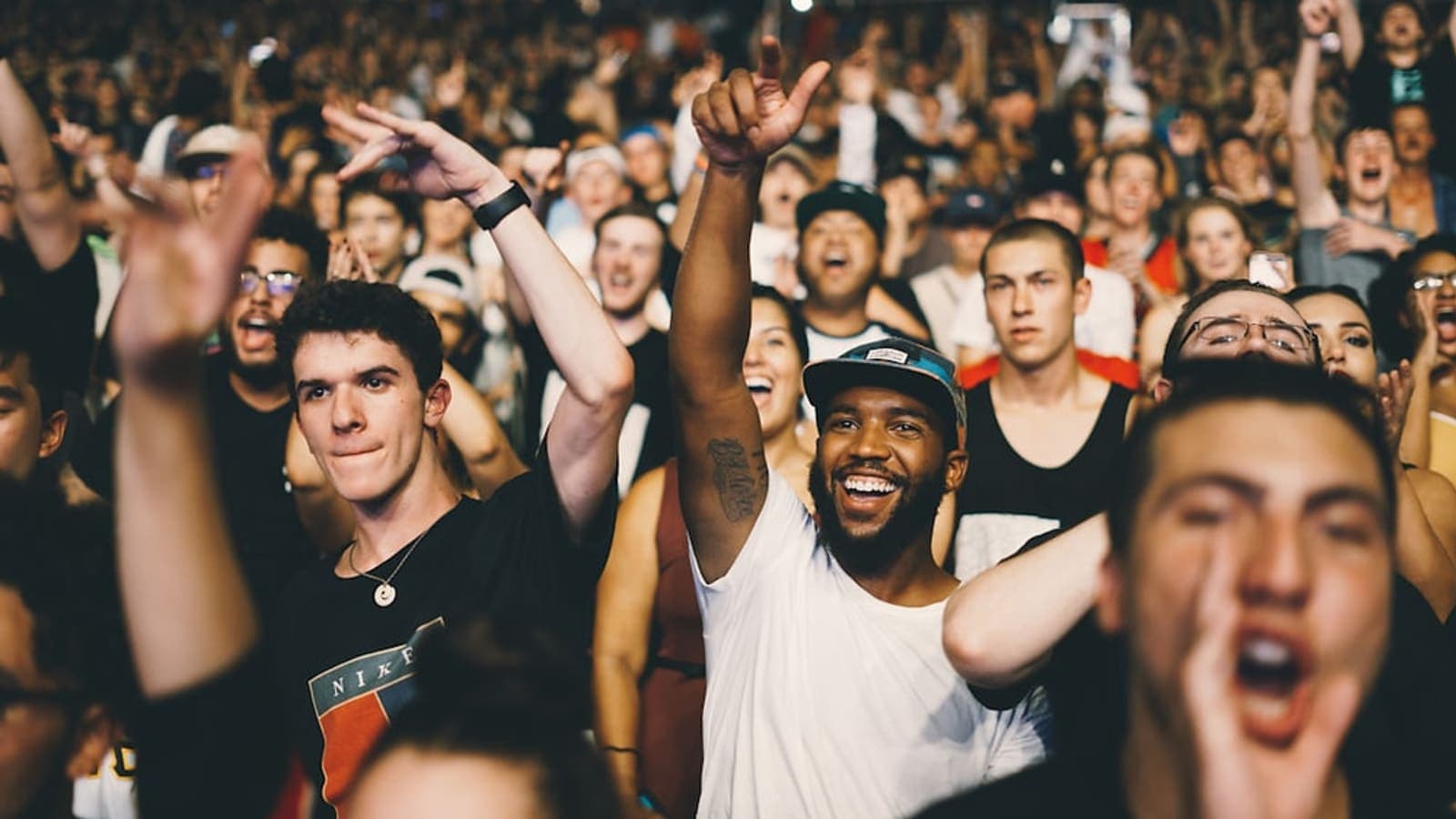
Major sporting events drive audience engagement, consumption, sponsorships and commercial disputes on an exceptional scale. In Brazil, the World Cup carries special economic relevance because it influences advertising campaigns, retail promotions, digital strategies, point-of-sale activations and institutional initiatives by companies across virtually every sector. The legal challenge lies in legitimately capitalizing on public interest without infringing trademarks, official symbols, media rights or sponsors' rights. In this scenario, ambush marketing is no longer a concern limited to large brands, it has become part of the compliance, governance and risk management agenda for any company seeking to communicate products or services during high-visibility sporting competitions.
The central point to understand is that Brazilian law does not prevent campaigns inspired by football, fan culture or the national mood of celebration. A company may engage with generic themes, use creative language and explore the cultural context of the event, provided it does not create the impression that it is an official sponsor, partner, licensee or supporter of the competition, FIFA, the CBF (Brazilian Football Confederation) or a national team. The line between lawful and irregular advertising is not about mentioning football, but about how the message is constructed, the overall visual composition, word choices, use of imagery, proximity to official symbols and the perception the average consumer may form.
Ambush marketing occurs when a company seeks to capture an event's visibility without acquiring the corresponding commercial rights. This practice can take place through association, when a campaign suggests a nonexistent official link, or through intrusion, when brands, products, services or promotional actions appear without authorization at event venues or during broadcasts. The General Sports Law (Lei Geral do Esporte), Law No. 14,597/2023, criminalized these conducts in articles 170 and 171, providing for detention of three months to one year or a fine when there is intent to obtain economic or advertising advantage. Articles 168 and 169 are also relevant, addressing the reproduction, imitation, sale or commercial display of symbols owned by sporting organizations without authorization.
Beyond the General Sports Law, the analysis must also consider the Industrial Property Law (Lei da Propriedade Industrial), Law No. 9,279/1996, particularly its trademark protection rules and provisions against unfair competition, the Copyright Law (Lei de Direitos Autorais), Law No. 9,610/1998, the Civil Code, regarding abuse of rights and civil liability, and the Consumer Protection Code (Código de Defesa do Consumidor), when a communication may mislead the public. The Brazilian Advertising Self-Regulation Code (Código Brasileiro de Autorregulamentação Publicitária) is also important, as it guides ethical conduct in advertising and can support challenges before CONAR, Brazil's advertising self-regulation council. As a result, an irregular campaign can trigger cease-and-desist notices, obligations to withdraw ad materials, loss of media investment, damages, seizure of products, reputational harm and, in specific cases, criminal liability.
FIFA's intellectual property guidelines for the 2026 World Cup reinforce this logic by stating that only rights holders may commercially exploit official intellectual property. Protected assets include official names, logos, emblems, trophies, slogans, mascots, posters, typefaces, official hashtags, the match calendar and other elements capable of identifying the tournament. FIFA allows editorial, journalistic, informational or descriptive uses, but distinguishes these from commercial exploitation. For companies, greater caution is warranted, since a sponsored post, a prize promotion, a themed store display, a domain name, a landing page or an influencer campaign may be interpreted as improper commercial association if it uses official signs or implies authorization.
Brazilian experience shows that prevention is increasingly relevant. For the 2014 World Cup, the General World Cup Law (Lei Geral da Copa) created a temporary regime protecting FIFA's commercial rights. With the General Sports Law, part of this framework became permanent within the sporting environment. For the FIFA Women's World Cup 2027, to be held in Brazil, Law No. 15,421/2026 established a special regime for the protection of intellectual property, media rights and marketing rights, in addition to providing for commercial restriction zones around official venues and related event spaces. The regulatory trend is clear, major sporting events will require prior legal planning, especially for fast-circulating digital campaigns.
On the case law front, although not every precedent deals directly with the World Cup, Brazil's Superior Court of Justice (STJ) offers useful parameters for companies. The STJ has repeatedly held that trademark protection exists not only to preserve the owner's economic interests, but also to prevent consumer confusion, unlawful diversion of clientele and parasitic economic gain. In rulings involving trademarks, counterfeiting and trade dress, such as Topic 950 (Tema 950) and special appeals concerning the misuse of distinctive signs, the Court has recognized that unfair competition can arise even when the irregularity is not limited to the literal copying of a trademark. This reasoning is essential for sports marketing, since seemingly creative campaigns can be challenged when they rely on another party's prestige to a degree sufficient to create improper association.
For business owners and managers, the key insight is that the risk is not limited to the use of logos. Expressions such as the tournament's official names, mascots, images of the trophy, uniforms bearing emblems, official hashtags, tickets offered as promotional prizes, match footage, broadcast clips, similar visual identity and phrases like 'World Cup sponsor' or 'official promotion' all require authorization. Caution is also warranted regarding references to the Brazilian national team and to athletes, since there may be rights held by the CBF, image rights, sponsorship agreements and specific restrictions assumed by players, clubs or sporting entities.
This does not mean companies must steer clear of the sporting calendar. The safest strategy is to build campaigns around generic elements, such as football, fan culture, celebration, national colors used without reproducing official emblems, creative expressions that avoid protected names, and original visual materials. Broad terms, narratives of unity, and promotions tied to customer performance or internal experiences can be lawful as long as they do not lead consumers to believe there is an official link. The practical question that should guide legal review is simple: could the public reasonably believe the brand received authorization, sponsors the event, or is part of the competition's official ecosystem? If the answer is yes, or even uncertain, the campaign should be adjusted.
Another important precaution involves contracts with agencies, influencers, audiovisual producers, franchisees and business partners. Liability for an irregular advertising piece can reach more than one party in the chain. For this reason, contracts should include obligations to respect intellectual property, prior content approval, a duty of immediate removal in case of challenge, rules on the use of generative artificial intelligence, liability for image banks, licensing of soundtracks, authorization from individuals depicted, and a prohibition on using official assets without permission. In nationwide campaigns, it is advisable for the legal department to review not only the final piece, but also scripts, captions, promotion names, sweepstakes mechanics, paid media, influencers and point-of-sale materials.
Internal governance should turn this issue into a structured procedure rather than something improvised. An efficient workflow includes mapping protected assets, a risk matrix by campaign type, prior validation of advertising claims, review of social media content, training for marketing and customer service teams, preservation of approval records, and a response plan for cease-and-desist notices. This approach reduces the likelihood of urgent campaign takedowns, avoids reputational costs, and demonstrates good faith should a sporting entity, official sponsor or self-regulatory body raise a challenge.
The World Cup generates real opportunities for corporate communication, but it also exposes companies to significant legal risks when advertising creativity crosses the boundaries of free enterprise and edges toward the appropriation of another party's reputation. The balance lies in tapping into football's cultural context without exploiting protected assets, without suggesting an official link, and without confusing consumers. Brazilian legislation has evolved to address ambush marketing with greater rigor, and the trend is for sporting entities, rights holders and sponsors to act increasingly preventively, especially in the digital environment.
For companies, the best response is strategic: plan campaigns well in advance, have creative concepts legally reviewed before publication, document authorizations, and align agencies and partners. Preventive legal counsel, when integrated with marketing and corporate governance, should not be seen as a barrier to creativity, but as a tool for protecting investments, reputation and business continuity.
Written by Luiza Sperandio Adum Hemmig